Nabil Shehadeh
Data Scientist
Today
I'm a data scientist finishing an MS in Applied Data Science at USC. By day I'm a data engineer at T-CETRA, building AWS pipelines that clean, validate and flag anomalies before data reaches a model.
I'm also building KSHF Clear to decide whether an aircraft part is real before it goes into stock. I like models whose answers have to hold up in front of an inspector, a clinician or an auditor.
KSHF Clear Current work
Every part, proven real.
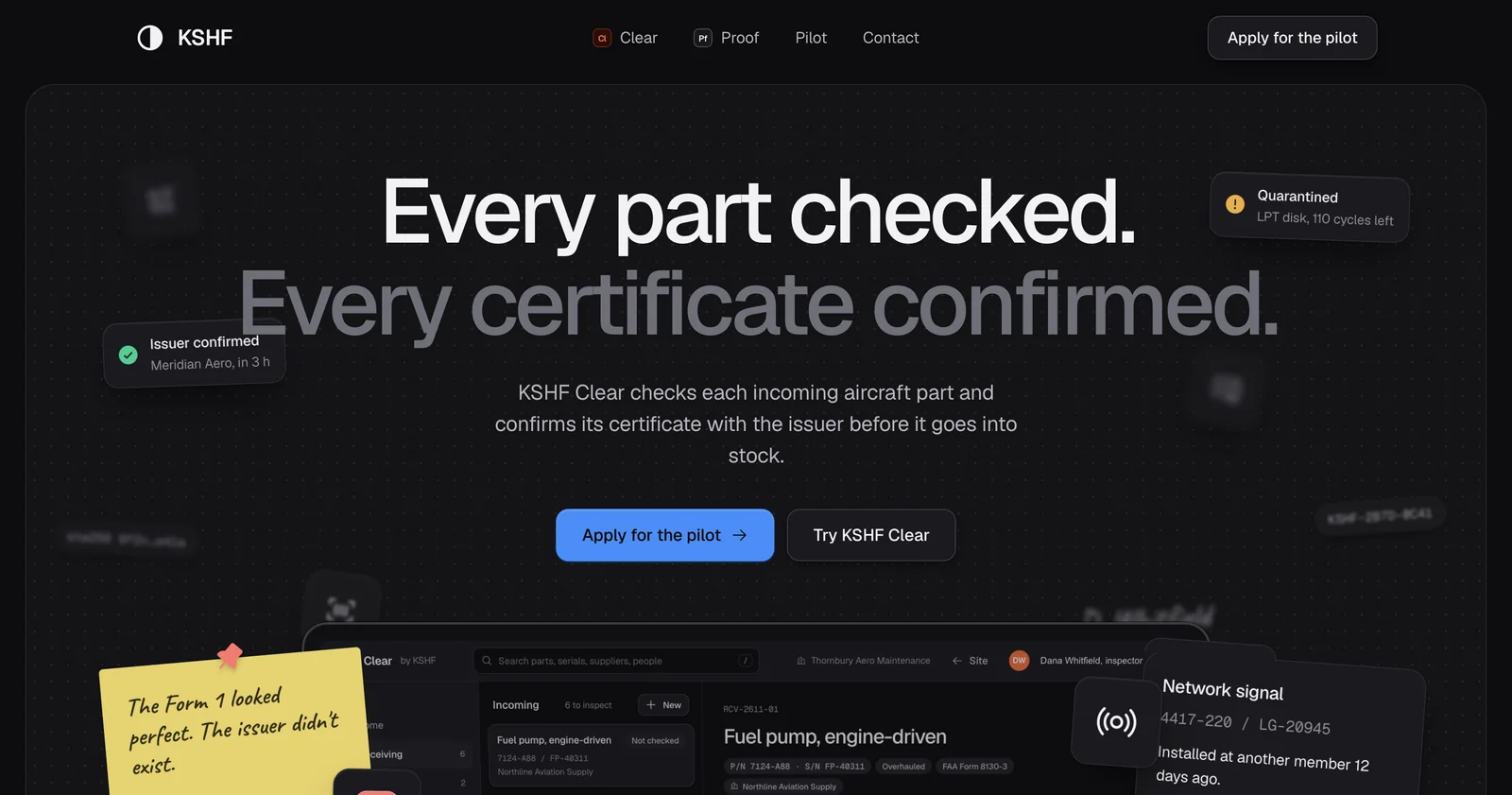
Clear checks the paperwork, history and supplier behind every part at the receiving bench, confirms the certificate with the organisation that issued it, and seals the decision so anyone downstream can verify it.
-
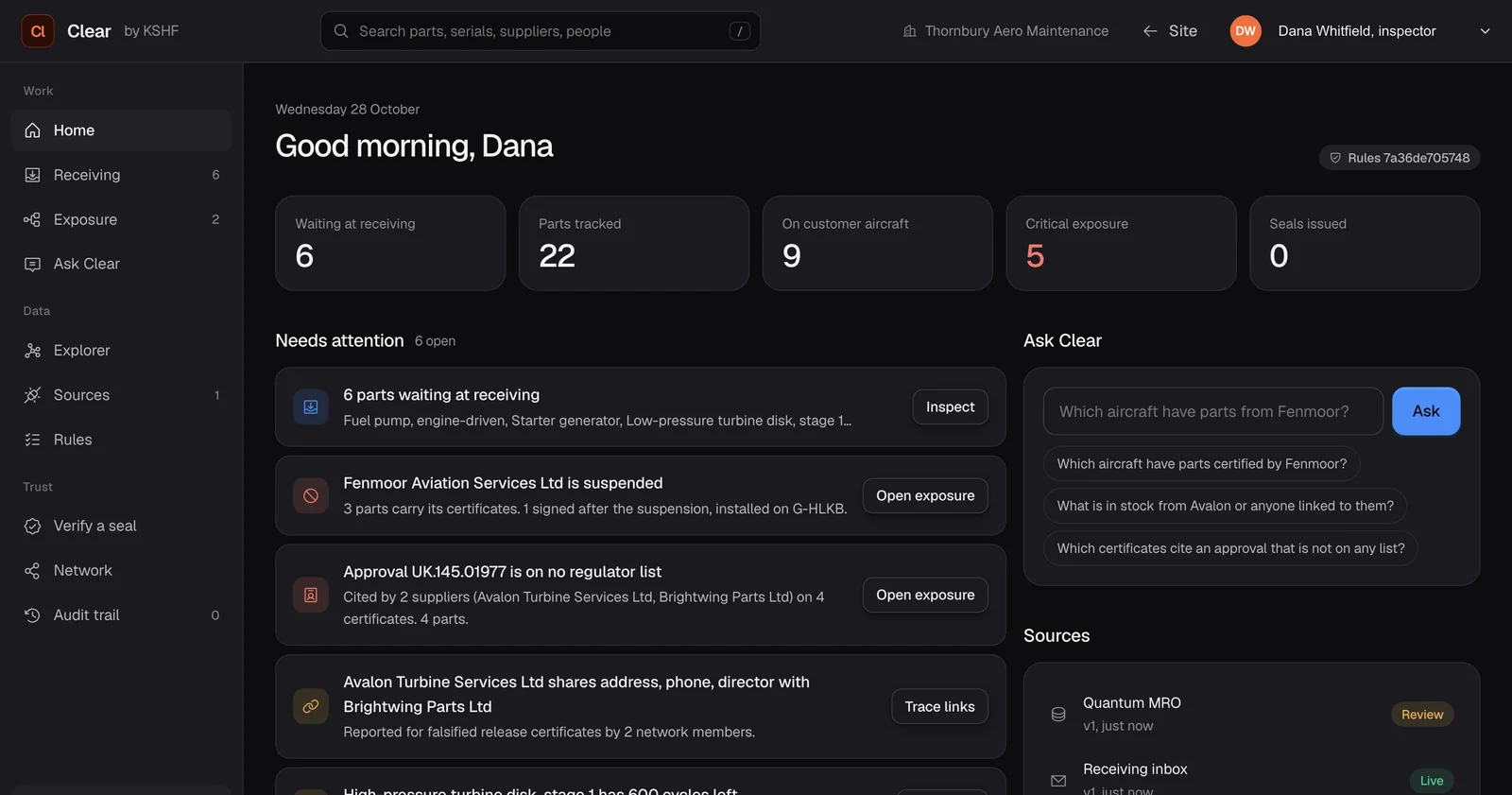
The paperwork passed.
Between 2019 and 2023, AOG Technics sold more than 60,000 suspect engine parts on forged release certificates. Every one looked fine at receiving. Clear starts with what needs attention across every source.
-
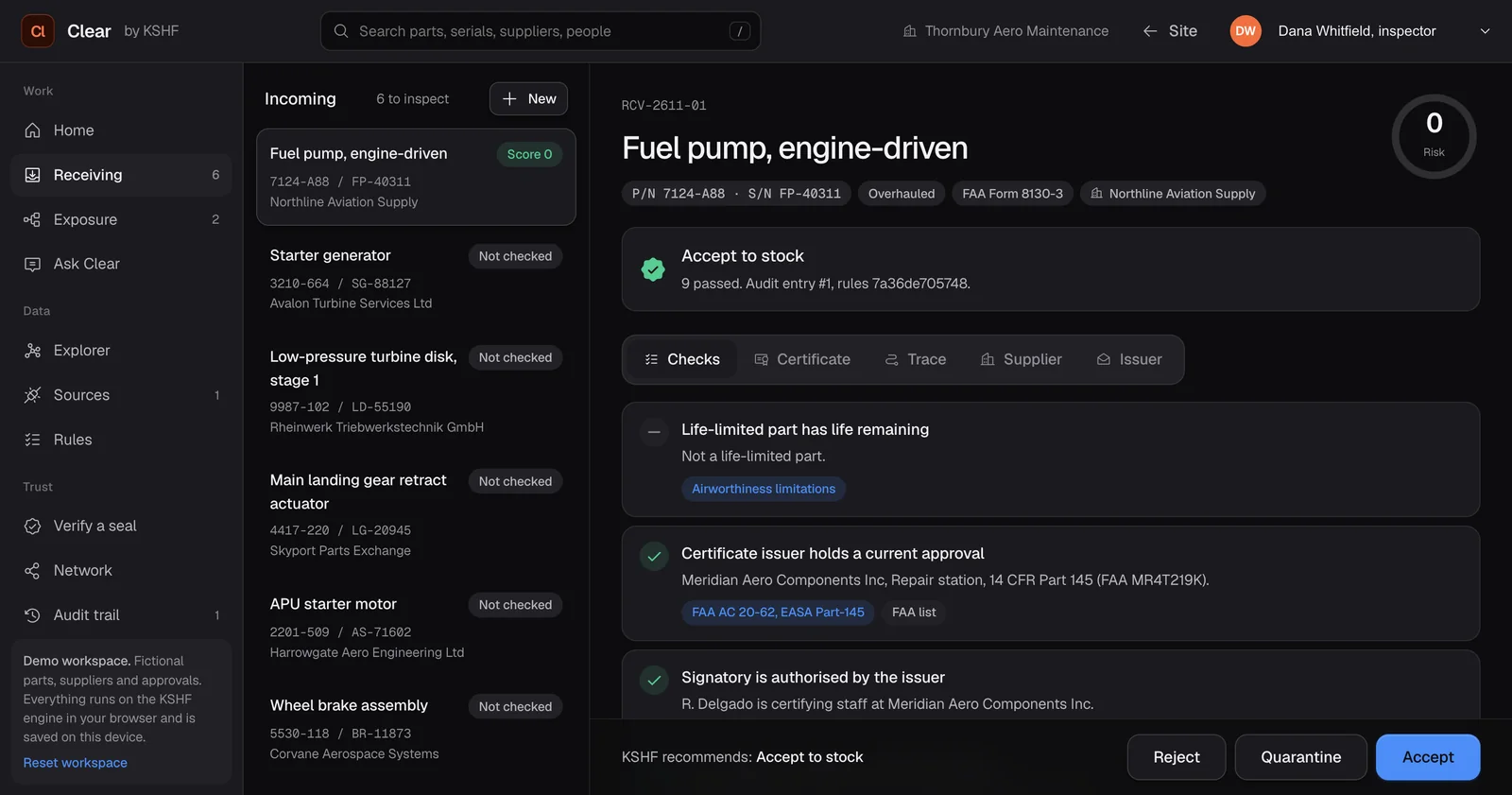
Ten checks, each with a reason.
The issuer's approval, the signatory, the part's history back to birth, your own stores and the wider network. Every result shows its evidence and the rule behind it, so an inspector can stand behind the call.
-
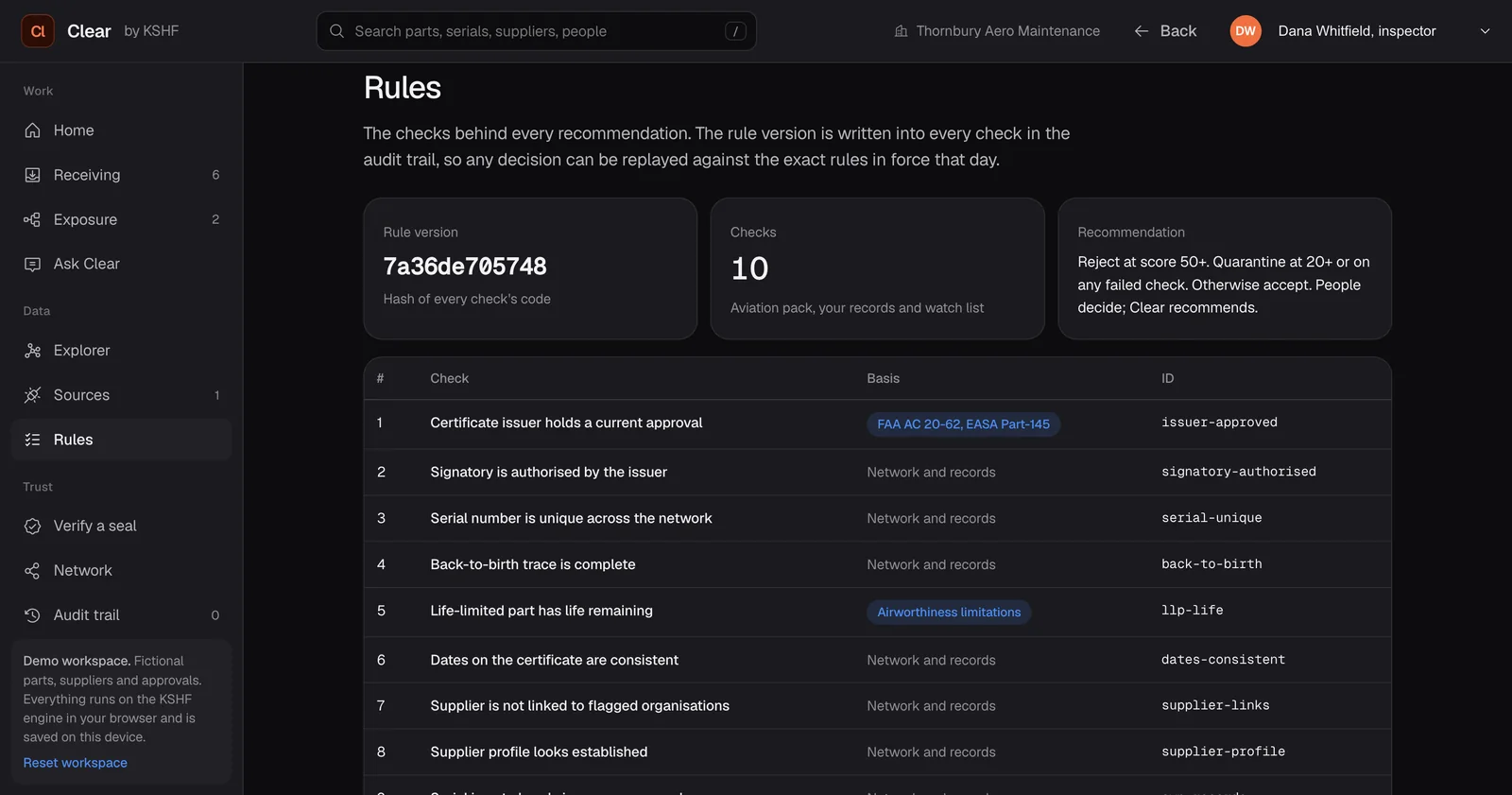
A score you can audit.
Each check returns a weighted reason, and the weights add up to a 0 to 100 risk score: 20 or more quarantines the part, 50 or more rejects it. Suppliers are linked in a graph by shared address, phone, domain, director or bank. Every signed decision is kept as a labelled outcome, so the next step is learning those weights from real verdicts instead of setting them by hand.
-
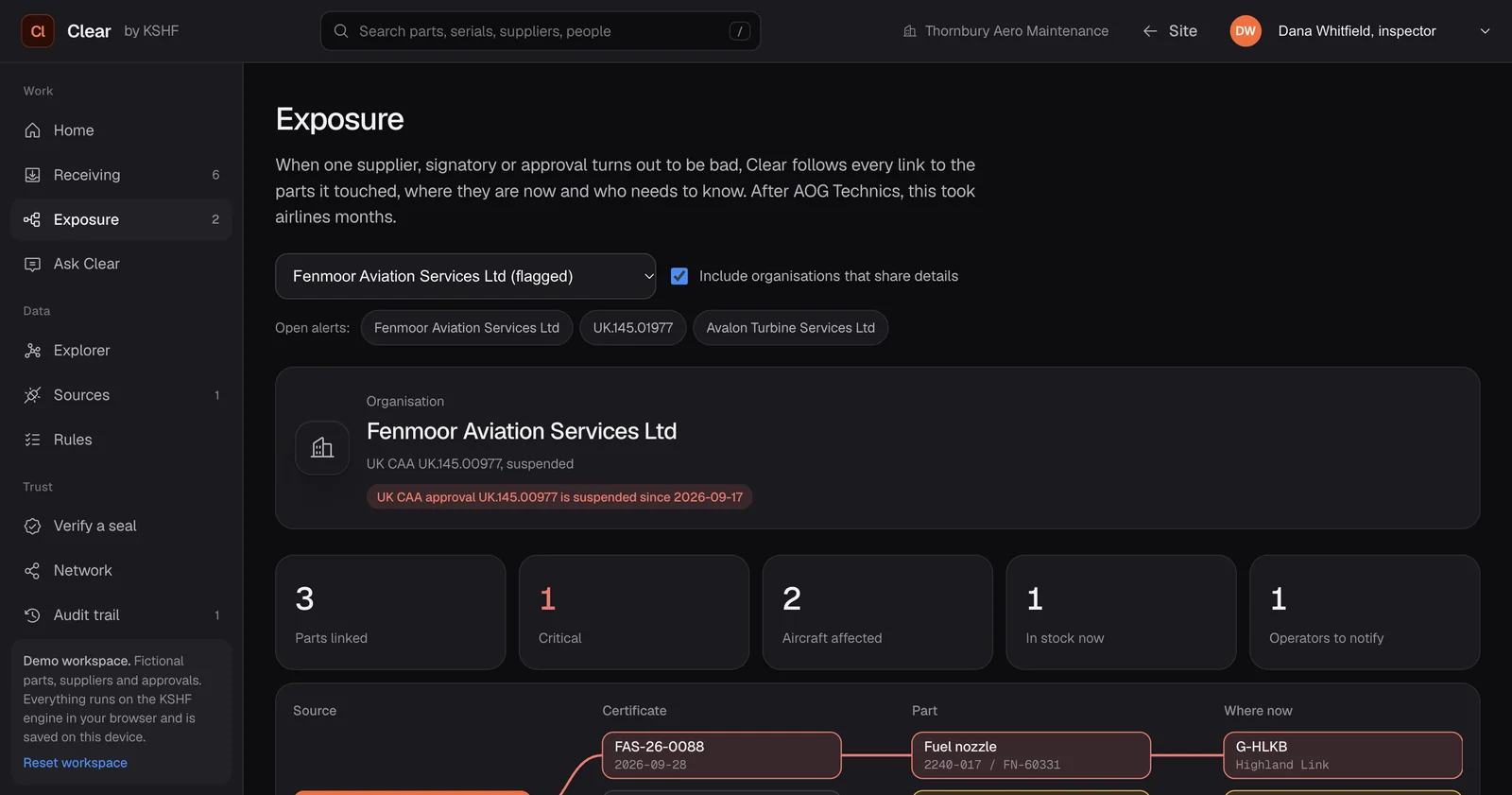
Exposure in seconds.
Start from a suspended supplier and Clear follows every link to certificates, parts, aircraft and operators. After AOG Technics, airlines spent months doing this by hand.
-
Answers you can check.
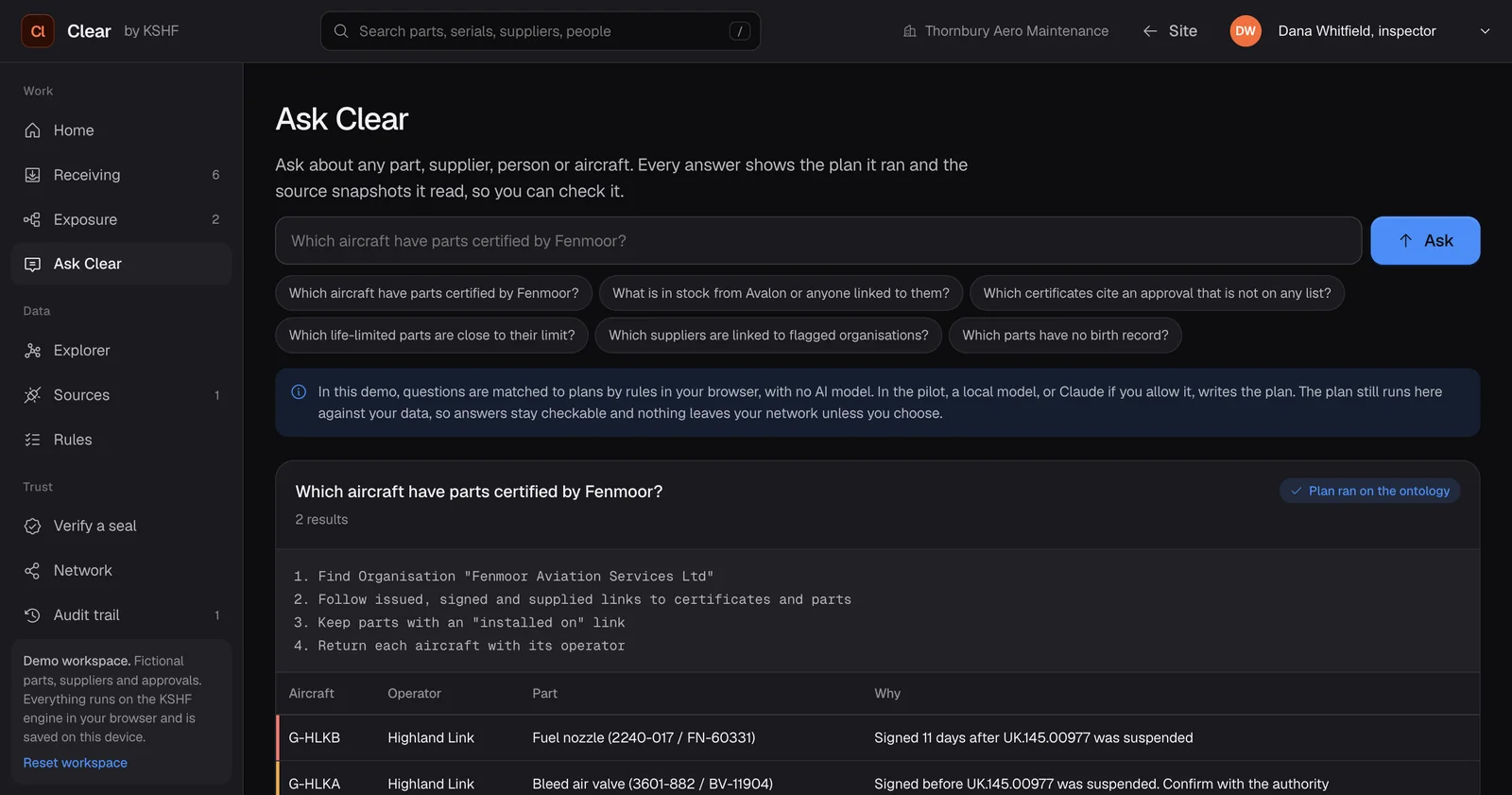
Ask in plain English. Clear shows the plan it ran and the source snapshots it read, so nobody has to trust a black box.
-
A record anyone can verify.
Each decision is signed, hash-chained and sealed. The format is published as KSHF Proof, an open standard, so the whole industry can raise its bar and not only our customers.
Click the screen to try it live.
Projects
-
 Fraud Detection System
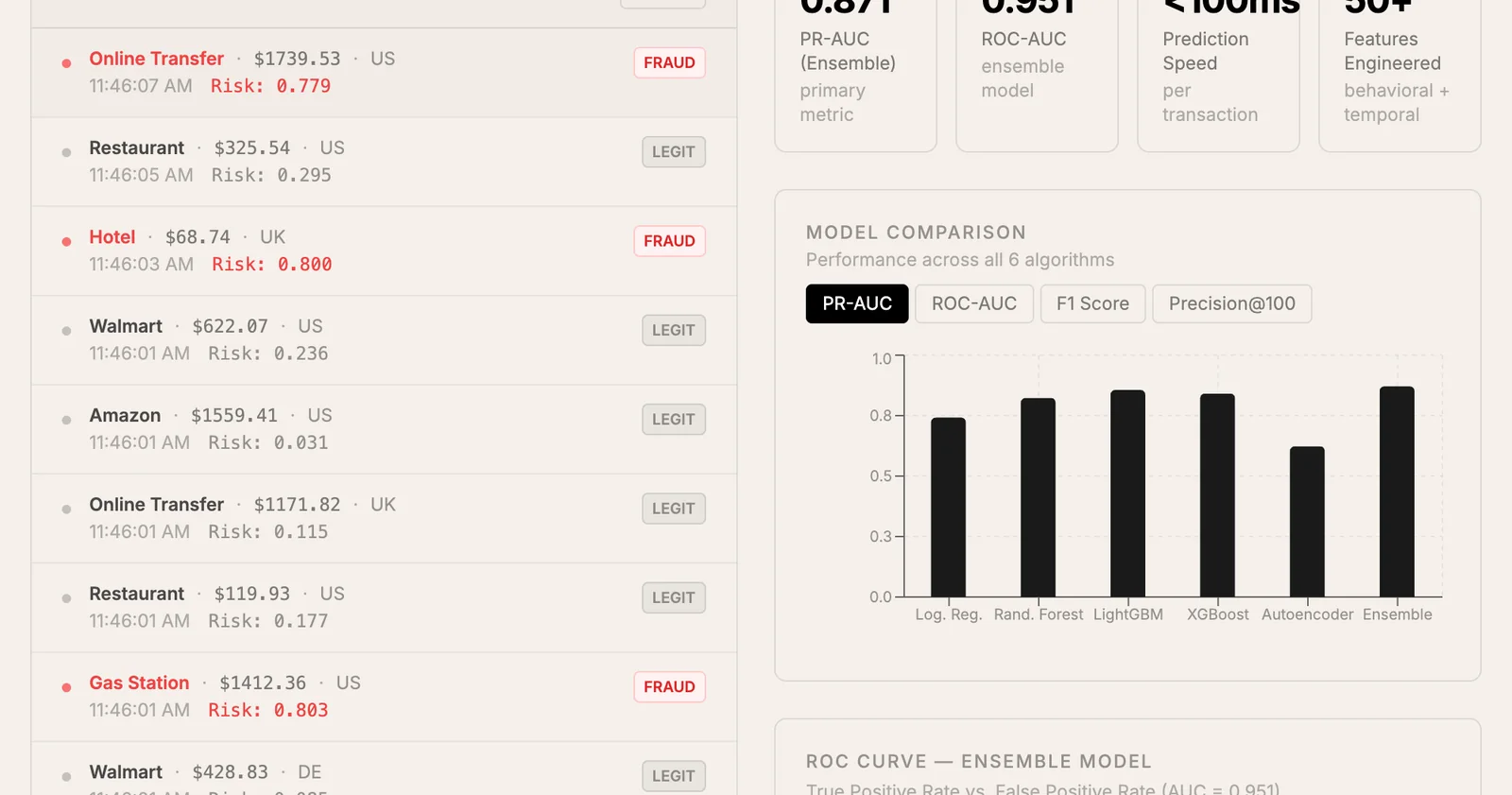
A six-model ensemble that reaches 0.871 PR-AUC on data where only 0.17% of transactions are fraud. Serves predictions in under 100ms, each explained with SHAP.
Source
-
 Network Anomaly Detection
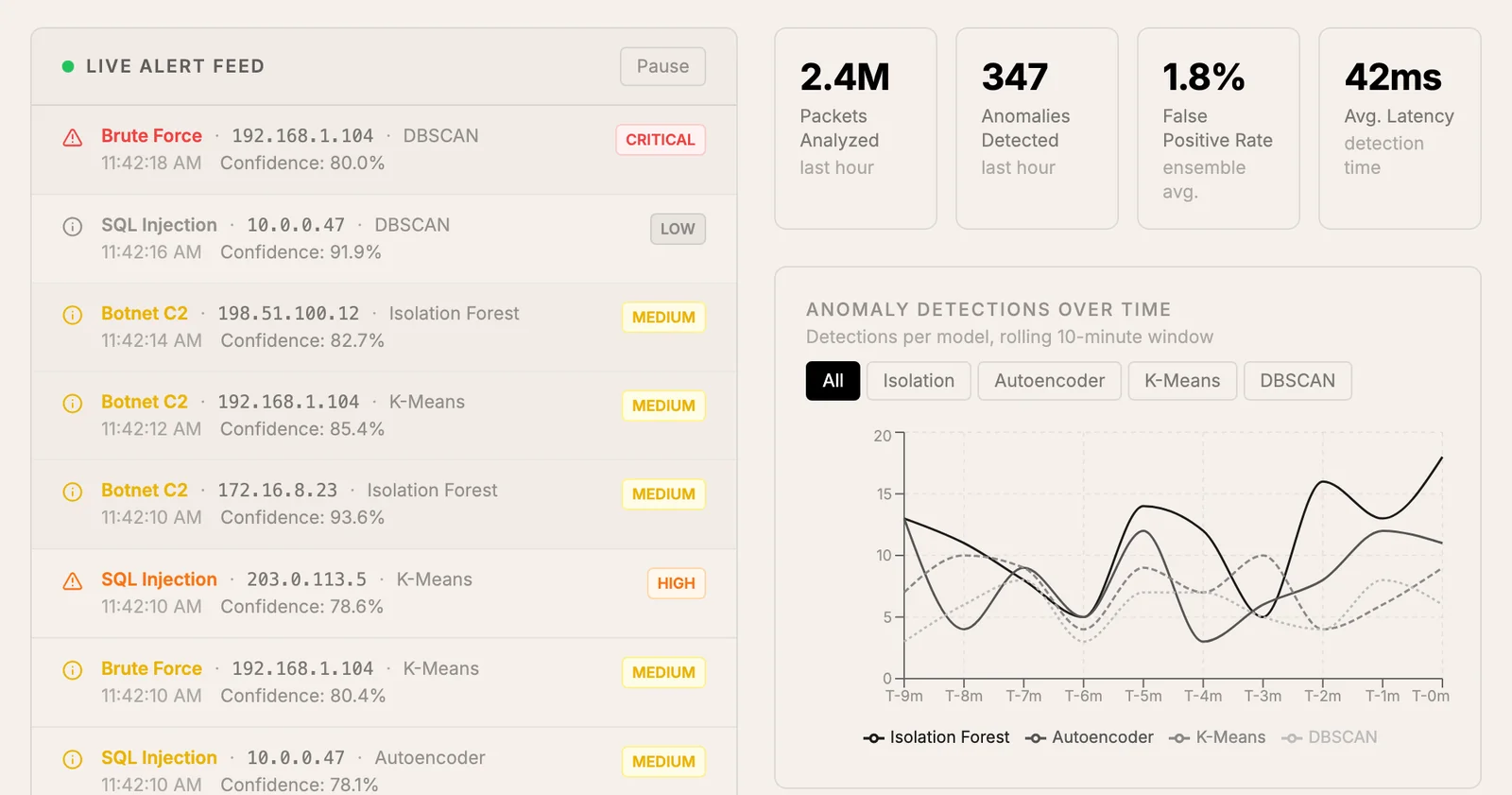
Live traffic through Kafka and Spark, four unsupervised detectors flagging intrusions as they happen.
Source
-
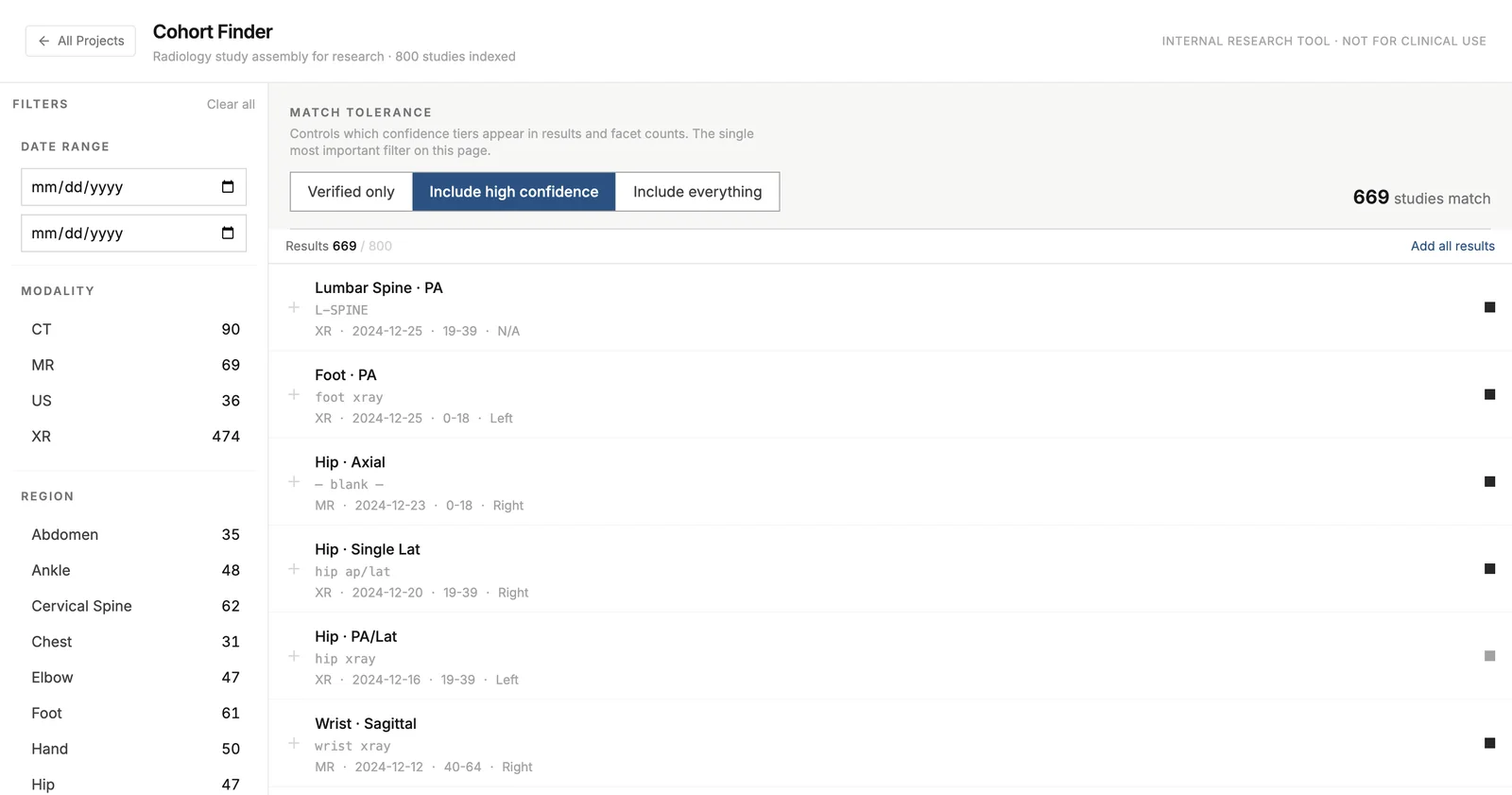 Cohort Finder
Assemble radiology cohorts from messy free-text labels, with model uncertainty made legible.